Hybrid Solar — savings and backup, in one system
The inverter prioritises solar, tops up from the grid when needed, and keeps a battery reserve for outages. Most homeowners with frequent power cuts end up here — you get the bill savings of on-grid plus a safety net.
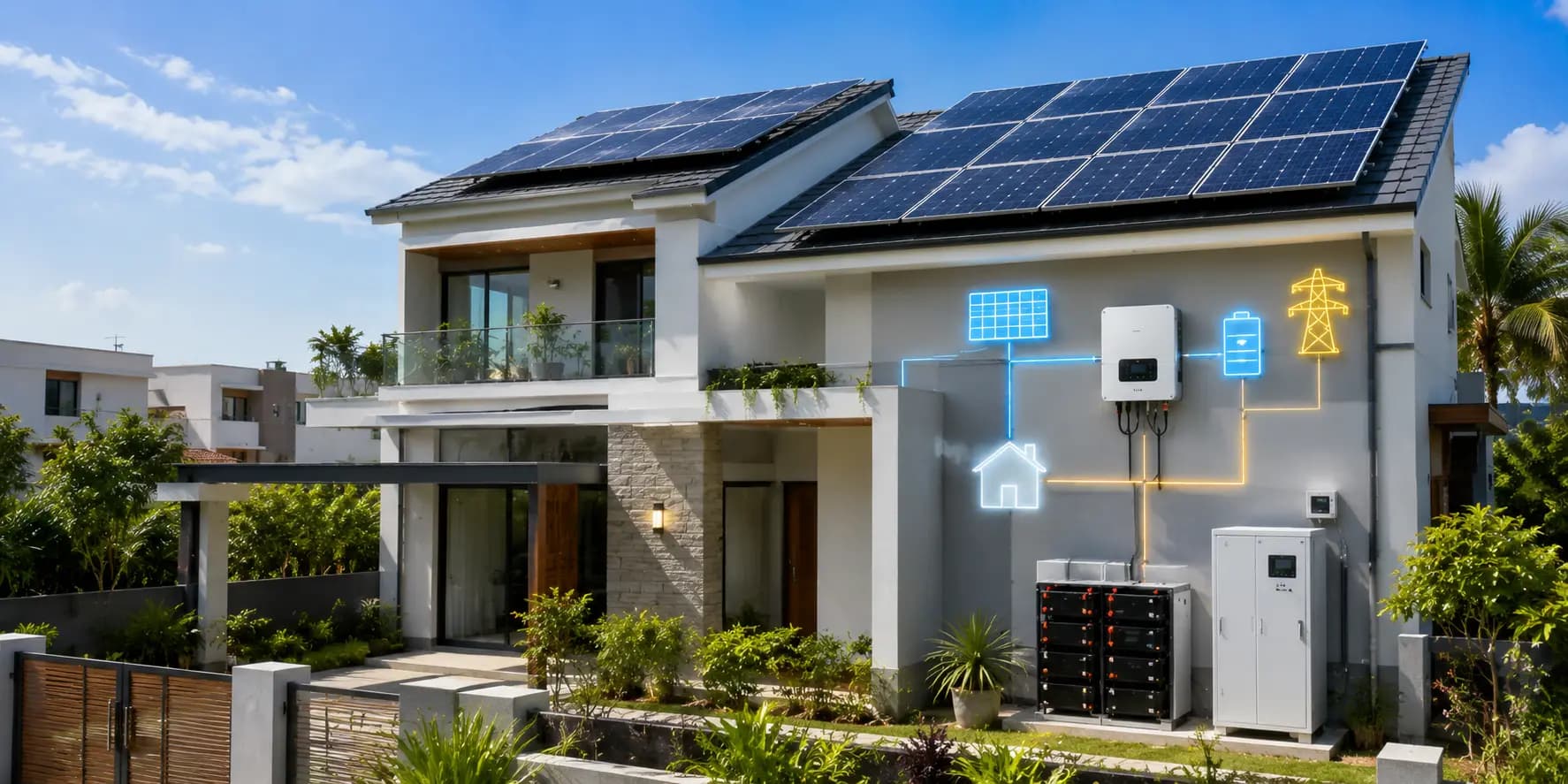
How a hybrid system works
Five components that switch between solar, battery and grid automatically.
Why homes with frequent outages choose hybrid
You get the fast payback of a grid-tied system, plus a battery reserve that kicks in the instant the grid goes down — no manual switching, no generator. It's the system most of our repeat customers upgrade to after a few outages on plain on-grid.
The battery adds cost over a plain on-grid system, and payback is a little slower. We'll help you size a reserve that covers what matters — lights, fans and a fridge — without over-specifying the battery.
Savings plus backup
Cuts your bill like on-grid, and keeps essential loads running when the power goes out.
Subsidy eligible for homes
Residential hybrid systems qualify for the same central subsidy as on-grid installations.
Smart load prioritisation
The inverter automatically chooses solar, then battery, then grid — no manual switching.
Expandable battery capacity
Start with a smaller reserve and add battery capacity later as your needs grow.
Common system sizes
Indicative figures for north Indian irradiance. Your survey gives exact numbers.
Generation and savings vary with location, shading, roof orientation and tariff. Figures above are estimates, not a quotation.
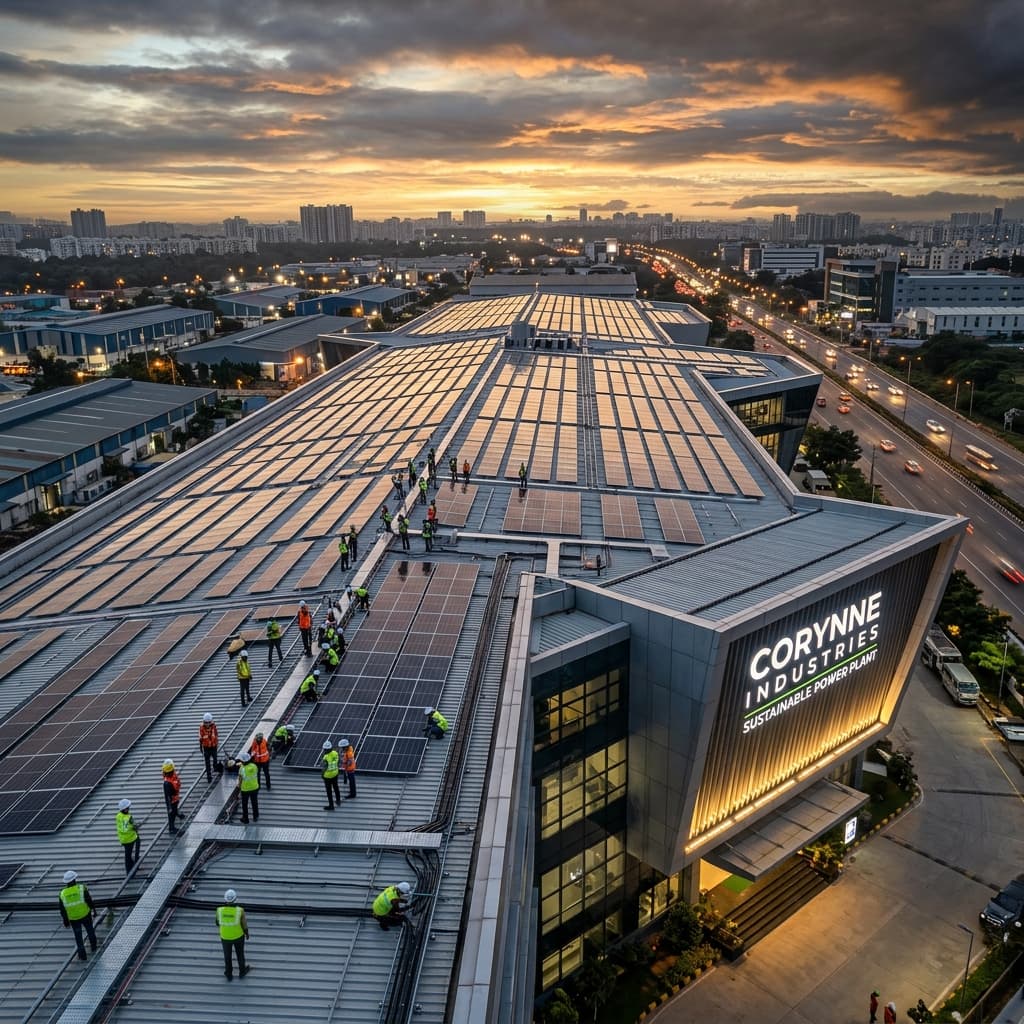
What goes on your roof
From first call to first backup
Typically 10 to 21 days depending on DISCOM approval.
Residential hybrid systems get up to ₹1,08,000 back
Under PM Surya Ghar Muft Bijli Yojana, the same subsidy slab applies to the grid-tied portion of a residential hybrid system: ₹30,000 per kW for the first 2 kW and ₹18,000 per kW for the third, capped at ₹78,000. We file the claim on your behalf.
Check My EligibilityGet a hybrid quote
Share your monthly bill and pin code. We come back with system size, battery reserve, subsidy amount and a firm price.