On Grid Solar — the fastest way to zero out your bill
Your panels power the house first. Whatever you don't use is exported to the grid through a net meter and credited against your bill. No batteries, lowest cost per unit, and the full central subsidy applies.
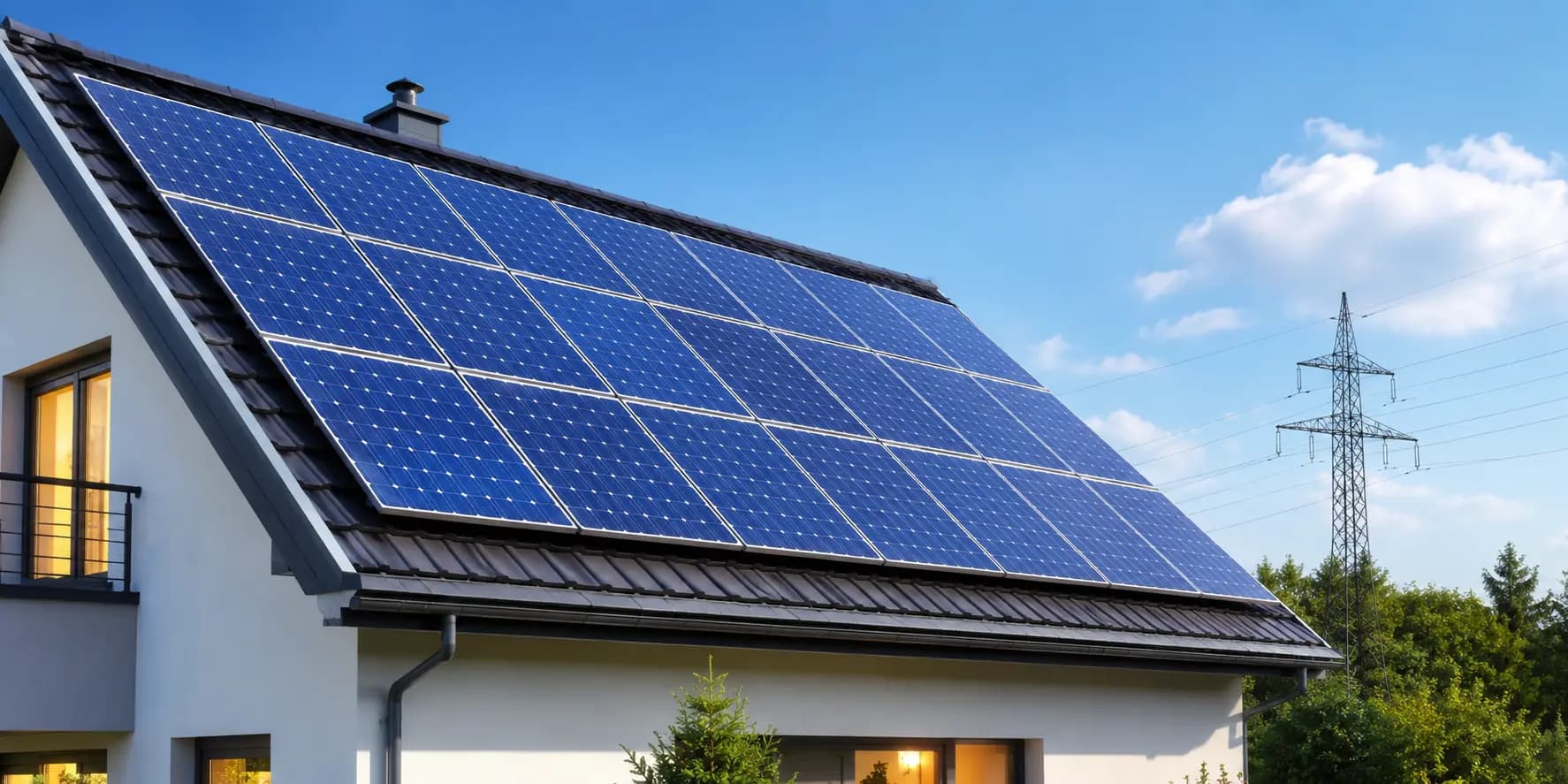
How an on-grid system works
Four components, no batteries in the loop.
Why most homes choose on-grid
Without a battery bank the system costs less, has fewer parts to fail and pays for itself faster. If your area has reliable supply, this is almost always the right starting point.
During a power cut an on-grid system shuts down for safety. If outages are frequent where you live, ask us about hybrid solar instead.
Lowest cost per unit
No battery bank means a smaller upfront bill and the fastest payback of any solar system.
Full subsidy eligible
Residential on-grid qualifies for the maximum central subsidy. We file the claim for you.
Almost no maintenance
Panels and an inverter, nothing to replace every few years. Just periodic cleaning.
Export credits
Units you do not consume are banked with the DISCOM and offset your night-time usage.
Common system sizes
Indicative figures for north Indian irradiance. Your survey gives exact numbers.
Generation and savings vary with location, shading, roof orientation and tariff. Figures above are estimates, not a quotation.

What goes on your roof
From first call to first unit
Typically 7 to 21 days depending on DISCOM approval.
On-grid residential systems get up to ₹1,08,000 back
Under PM Surya Ghar Muft Bijli Yojana, ₹30,000 per kW for the first 2 kW and ₹18,000 per kW for the third, capped at ₹78,000. We file the claim; the amount lands in your bank account after commissioning.
Check My EligibilityGet an on-grid quote
Share your monthly bill and pin code. We come back with system size, generation estimate, subsidy amount and a firm price.