Home/Services/Off Grid Solar
Battery Standalone System

Off Grid Solar — power your home with zero grid dependence

Panels charge a battery bank that runs your load day and night, sized around the appliances you actually need to keep on. The right choice where grid supply is absent, unreliable or expensive to extend.
24×7
Independent power
1–15 kW
Typical size range
Full
Backup during outages
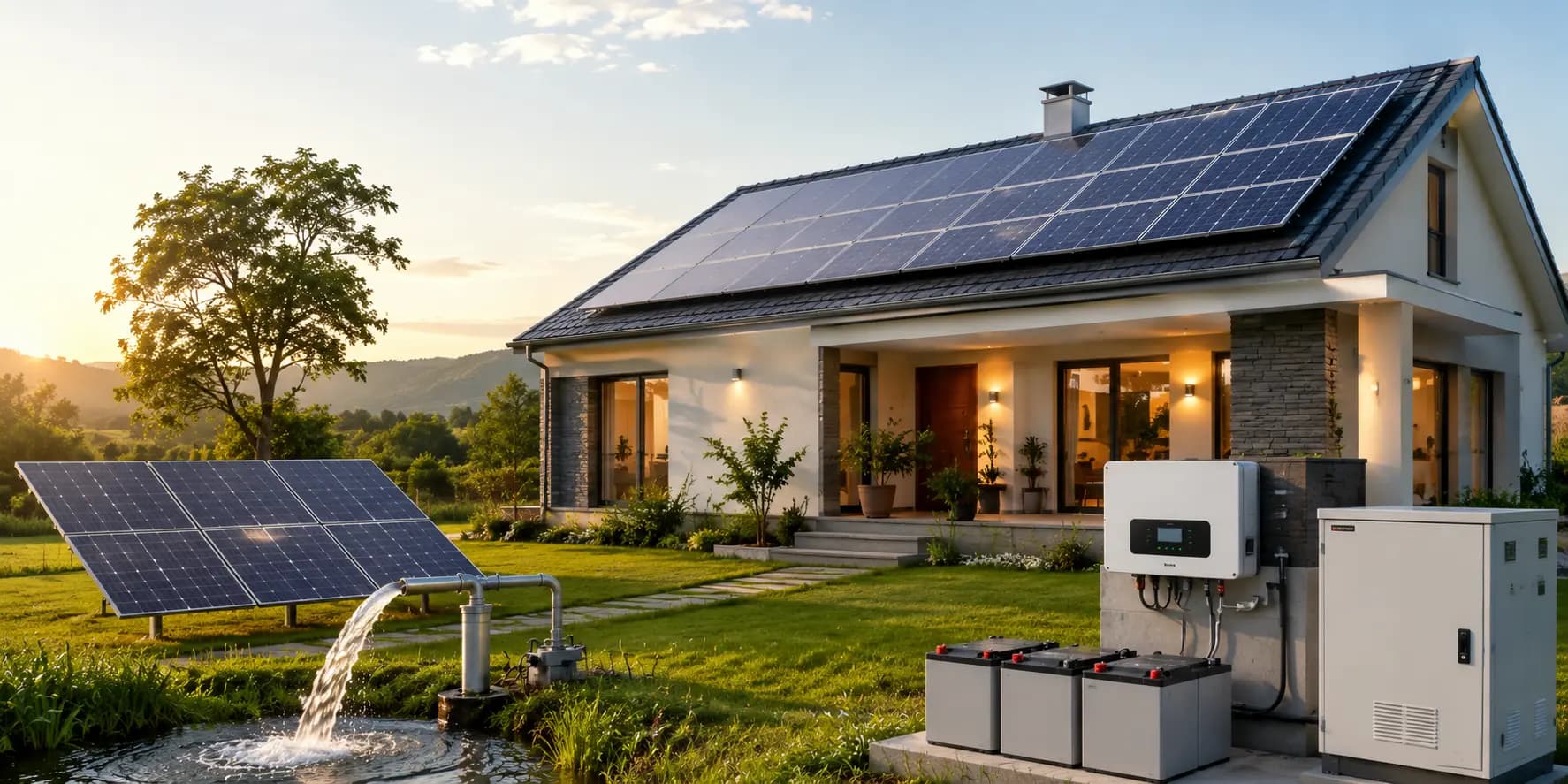
Off-grid solar with battery bank

How an off-grid system works

Five components, fully independent of the grid.

Solar panels
Convert sunlight into DC power on your roof.
Charge controller
Regulates charging so the battery bank isn't overcharged.
Battery bank
Stores power for use after sunset or during cloudy days.
Off-grid inverter
Converts stored DC power to usable AC power.
Your appliances
Runs your critical load with no grid connection at all.

Why choose full independence

Where grid extension is expensive or supply is unreliable, an off-grid system pays for itself in reliability alone. Every appliance you need runs on stored solar power, with no exposure to outages or voltage fluctuation.

One trade-off

Off-grid systems cost more upfront than on-grid because of the battery bank, and they don't currently qualify for the central rooftop subsidy. We'll size the battery to your real load so you don't overpay for capacity you won't use.

No grid connection needed

Works in locations with no grid access at all, or where extending a line is not worth the cost.

Runs through long outages

Battery reserve keeps critical appliances running through extended power cuts, day or night.

Sized to your load

We size panels and battery capacity around the specific appliances you need to keep running.

Lithium or tubular options

Choose tubular batteries for lower upfront cost or lithium for a longer, lighter-weight battery life.

Common battery bank sizes

Sized around typical household or farm loads. Your survey gives exact numbers.

1 kW
Lights, fans, a few small loads
Battery bank~2 kWh
Backup6–8 hrs critical load
Panels2–3
Best forSingle-room, remote hut
Request Quote
Most common
3 kW
Small home, essential appliances
Battery bank~6 kWh
Backup10–12 hrs critical load
Panels6–7
Best forRemote homes
Request Quote
5 kW
Full home, fridge and pump included
Battery bank~10 kWh
BackupFull overnight
Panels10–12
Best forFarmhouses
Request Quote
10 kW+
Farm loads, small commercial
Battery bank~20 kWh
BackupFull 24×7 cycle
Panels20+
Best forFarms, remote shops
Request Quote

Battery life and backup hours vary with usage pattern, sunlight and battery chemistry. Figures above are estimates, not a quotation.
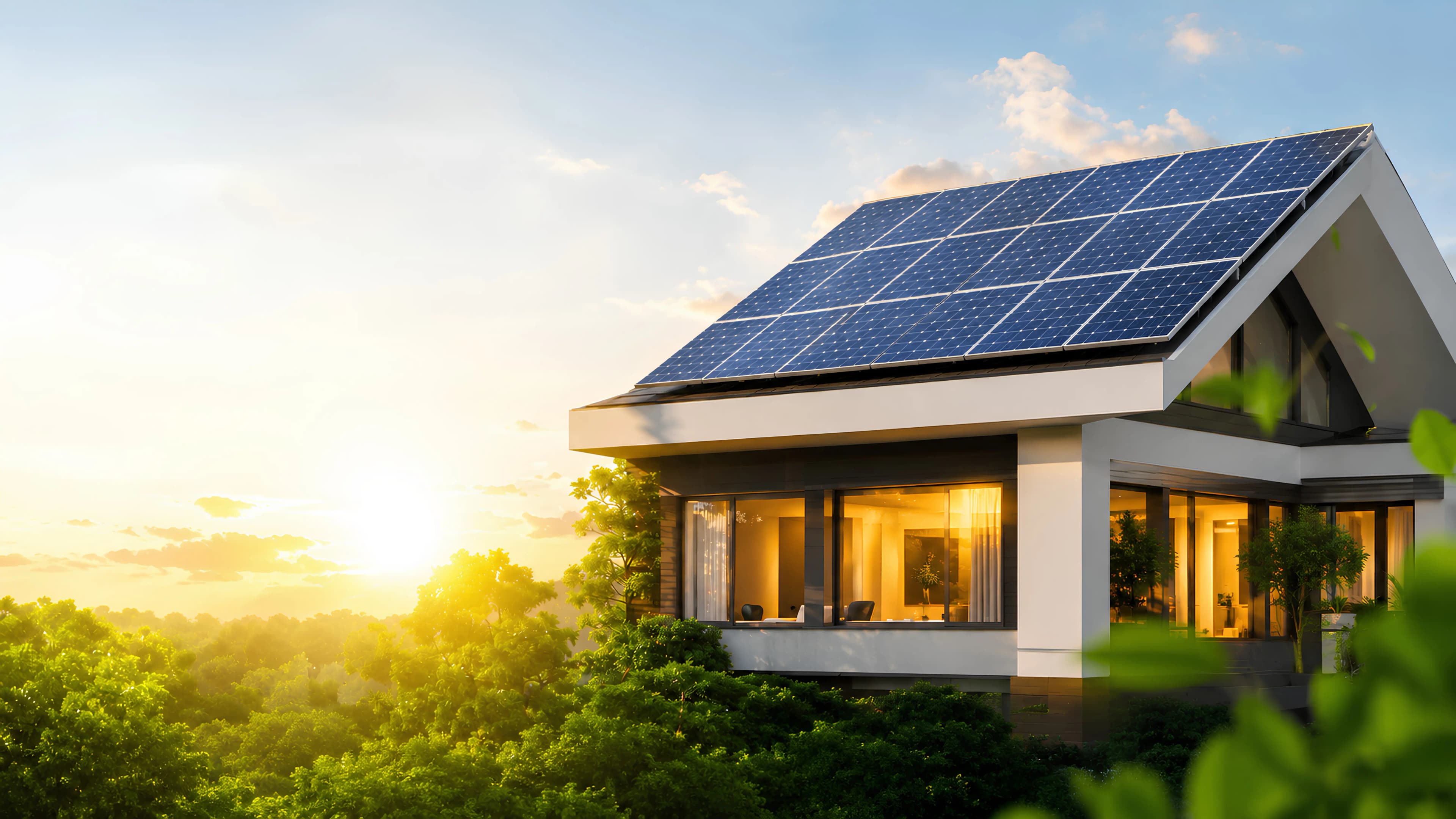
Off-grid battery bank and panel setup

What goes into your system

Tier-1 solar panels
Sized to fully recharge your battery bank on an average sunlight day.
MPPT charge controller
Maximises charging efficiency and protects the battery bank from damage.
Tubular or lithium battery bank
Deep-cycle batteries built for daily charge and discharge cycles.
Off-grid inverter
Pure sine wave output, safe for sensitive appliances and pumps.
Mounting structure & wiring
Wind-rated structure with surge protection and proper earthing.

From first call to first backup

Typically 5 to 10 days, no DISCOM approval needed.

01
Load assessment
We list your critical appliances and daily usage pattern.
Day 1–2
02
Design & quote
Battery and panel sizing, backup estimate and firm price.
Day 2–3
03
Installation
Structure, panels, battery bank and inverter on site.
2–3 days
04
Commissioning
System tested under load, handover and orientation.
Day 5–10

Get an off-grid quote

Tell us your critical appliances and pin code. We come back with battery size, backup hours and a firm price.

Free load assessment
Written backup-hours estimate
Battery chemistry options explained
One year of free AMC included
Free survey. No obligation to buy.

Off-grid questions